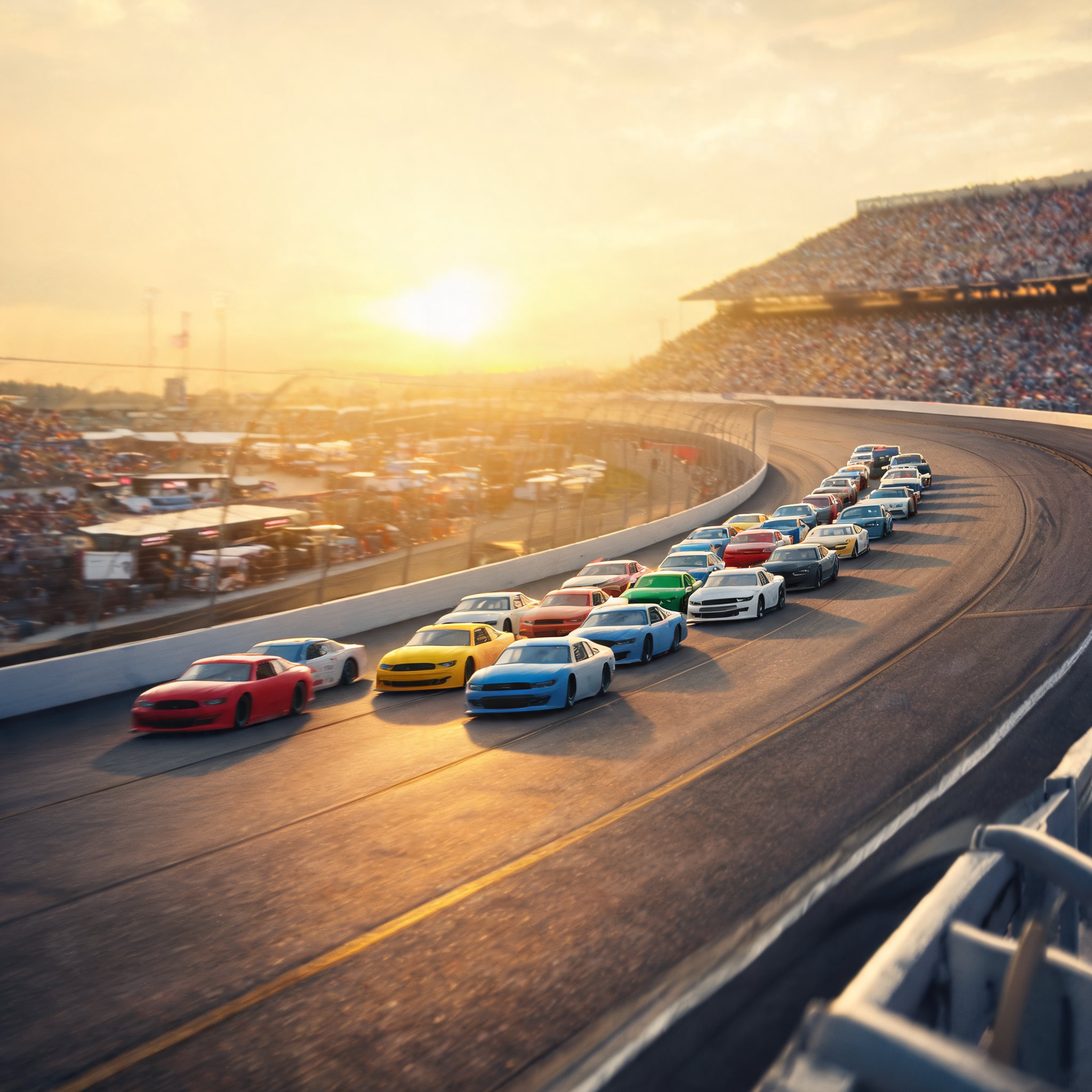
NASCAR Classics has released a widescreen HD “Sights & Sounds” video of the 2001 EA Sports 500, the fall Cup Series race at Talladega Superspeedway. The video is built from trackside camera clips and carries no commentary or narration, giving viewers a more intimate, home-movie style presentation than a standard race broadcast.
The channel, which hosts clips and full races from across NASCAR’s 78-year history, has recently begun mixing these silent, high-definition trackside edits into its usual broadcast uploads. The footage is described as higher quality than most viewers would have seen on early 2000s televisions. The absence of voiceover is central to the effect: engine sound, crowd reaction and on-track action carry the video.
A season defined by loss and response
The 2001 season began in tragedy. Dale Earnhardt Sr. was killed in a crash in the final corner of the Daytona 500, just as Michael Waltrip and Dale Earnhardt Jr. secured a 1-2 finish for Dale Earnhardt Inc. Earnhardt Jr. naturally became the focal point of the rest of the season, and the article notes that cheers are audible as he wins the Talladega race featured in the video.
Earnhardt Jr. had several emotional victories that year. They included the Pepsi 400, the first race at Daytona after his father’s death, and the first race after the September 11 terrorist attacks, held at Dover. Despite those storylines, Jeff Gordon was ultimately crowned champion, a result the article uses to illustrate how competitive the Cup Series was that season.
Star names and recognizable cars
The EA Sports 500 field included memorable names such as Tony Stewart and Mark Martin. Martin, then 42, drove a Viagra-sponsored Ford, a pairing the article cites as an example of the era’s distinctive sponsor liveries. The piece also recalls that the cars sounded strong, raced well and carried paint schemes from sponsors that, in the author’s view, did not inspire grimaces once their businesses were known.
For the author, those elements help explain why NASCAR was more or less at the peak of its popularity in the early 2000s. The series was more commercialized than in its romanticized early days of bootleggers and shade-tree mechanics, but it had found a formula that worked. The 2001 season, now 25 years in the past, is presented as aging well when seen through high-quality footage.
Why the format matters
The “Sights & Sounds” approach changes the way a race can be watched. Instead of relying on broadcast graphics, commentary and planned storylines, the video lets trackside views and ambient audio set the pace. That makes the release less a historical recap than an atmospheric record of a specific afternoon at Talladega.
The article recommends the video as a kind of existential palate cleanse: hit play and turn up the volume. Its appeal rests on the combination of a consequential season, a recognizable cast of drivers and a presentation that strips away most of the usual television packaging.