HAMS Garments Ltd. has recorded a 78.1% cut in CO₂ emissions and received the World Championship for Energy Savings (WCES) Certificate, a result the company presents as putting it among the leading contenders for the 2026 WCES Award.
The outcome comes from an existing apparel plant in Bangladesh with a gross floor area of 203,030 sq ft (18,861.95 m²) and about 3,216 regular occupants, where production creates continuous demand for lighting, ventilation, cooling, compressed air, pumps and motors. Rather than rebuild, the company reworked how the site operates, combining energy audits, equipment efficiency, on-site renewables, commissioning, metering, operational controls, preventive maintenance and staff involvement.
Verified performance
The approach was assessed independently through LEED v4 Existing Buildings: Operations & Maintenance certification at Platinum level, with 108 of 110 points. The project reports an overall energy saving of 75.25% and a 47.36% renewable energy contribution, figures the company uses to argue that existing industrial buildings hold substantial decarbonisation potential.
Efficiency investments
Measures were selected as a coordinated package rather than a single fix, identified and ranked through ASHRAE Level 1 and Level 2 audits plus continuing review of building and production energy performance. They included upgraded and optimised energy-consuming equipment and systems, more efficient lighting, removal of unnecessary electrical loads, better performing motors, pumps and other equipment, and improved ventilation and cooling. Strengthened metering and sub-metering were added to make consumption visible and to flag where corrective action was needed.
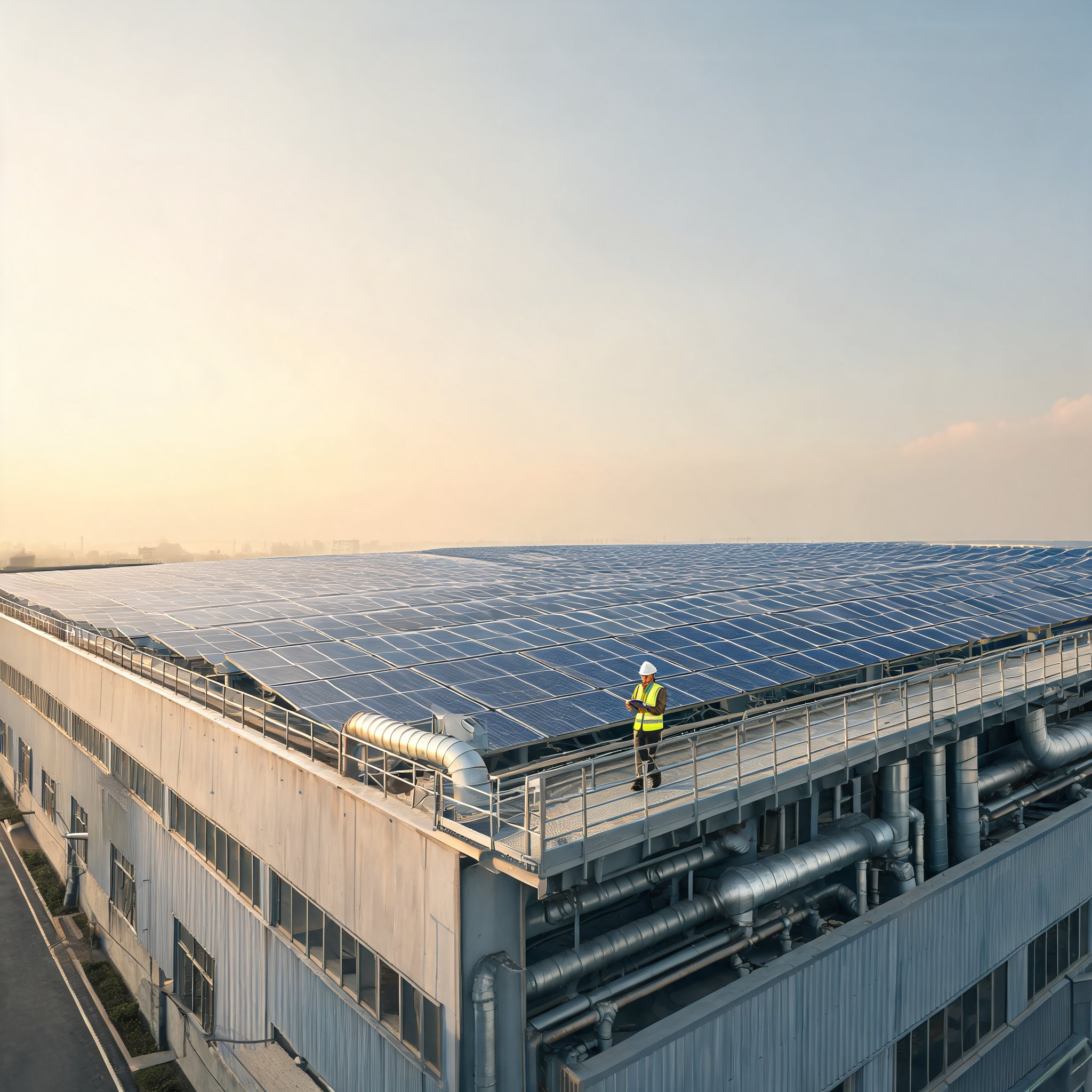
The largest single item was a 550 kW on-site solar photovoltaic array, which reduced reliance on grid electricity and fossil-based energy; renewables now account for roughly 47.36% of the project's energy use.
Operational discipline
Hardware investment is paired with an energy-management system built on metering, equipment trend reviews and building-management practices, so the facility team can spot abnormal consumption and inefficient operation. Ongoing commissioning, preventive-maintenance planning, equipment performance monitoring and defined operational responsibilities support the programme, and energy use is reviewed against expected performance at intervals so that corrective steps follow. A Demand Response programme that includes a 10% demand-reduction drill shows the plant can actively trim electrical demand when the grid is under stress, and operating schedules are reviewed to remove loads that production does not require.
Behaviour and accountability
The company states that technology alone cannot hold savings in place, and has folded training, operational guidelines, employee engagement and responsible energy-use practice into the programme. Facility and maintenance staff are trained in efficient operation, preventive maintenance, energy monitoring and corrective action. Procedures direct that equipment runs only when needed, unnecessary loads are switched off and energy-intensive activity is managed without compromising production, safety or occupant comfort. Structured action plans, assigned responsibilities and periodic performance reviews are used to maintain accountability.
HAMS frames the case as a replicable model for the apparel sector: deep savings, in this instance, came from better operation, informed users and continuous performance management as much as from capital spending.