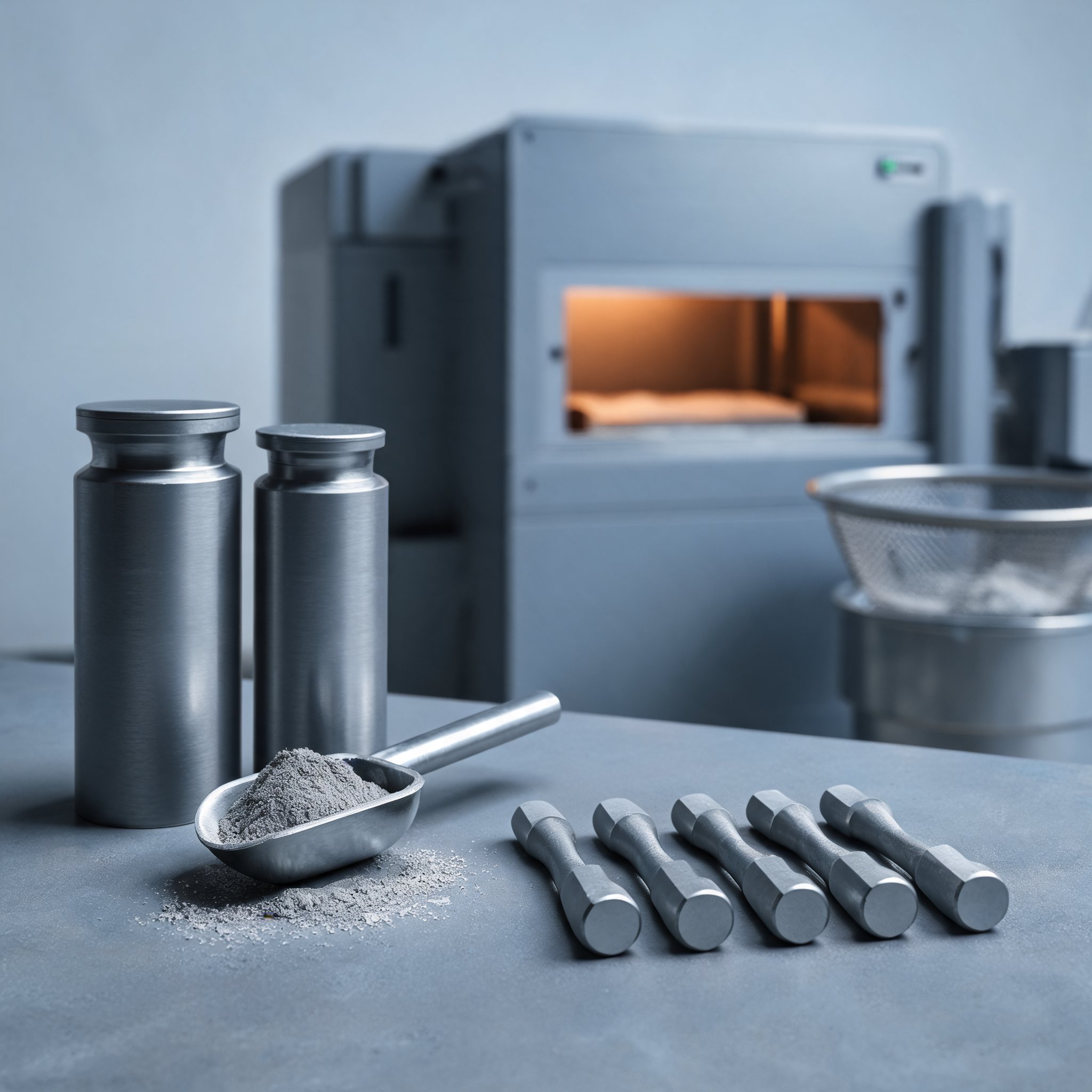
Eplus3D, Rosswag Engineering and qualloy have introduced Eplus3D select, a range of metal powders qualified for use with Eplus3D's metal additive manufacturing systems and its established process parameters.
The first materials in the portfolio are 316L stainless steel and 17-4PH, both tested and validated on Eplus3D equipment. qualloy has made the powders available since 9 November, holding stock in Germany with delivery expected in two to five business days.
Direct transition for existing users
Customers already running Eplus3D process parameters for the two alloys can move straight to the matching Eplus3D select materials. According to the companies, this is intended to cut the extra material qualification work that normally accompanies the introduction of a new powder.
Partnership roles and validation route
The launch is the first commercial result of a strategic partnership the three firms announced in April 2026. Eplus3D contributes its industrial metal powder bed fusion technology and established process parameters; Rosswag Engineering brings material qualification and testing expertise; and metal powder supplier qualloy handles material supply and distribution.
The partners set up the collaboration to qualify materials jointly and to develop validated material-process combinations for industrial additive manufacturing. For Eplus3D select, validation builds are produced at Eplus3D Germany using powder supplied by qualloy, and tensile specimens from those builds are then tested by Rosswag Engineering, linking powder supply, printing and mechanical testing within a single qualification process.
Measured mechanical properties
Testing covered both XY and Z build orientations.
- 316L: ultimate tensile strength of 664 ± 15 MPa in XY and 585 ± 15 MPa in Z.
- 17-4PH: ultimate tensile strength of 957 ± 10 MPa in XY and 980 ± 10 MPa in Z.
The companies report that the full results also cover Young's modulus, 0.2% yield strength and elongation.
Powder availability as volumes rise
Beyond material performance, the partnership is aimed at powder availability as metal additive manufacturing moves toward higher production volumes. Eplus3D select pairs existing process parameters with materials already evaluated on Eplus3D systems, so users can obtain powders assessed against those parameters, potentially trimming the qualification work tied to introducing a new powder.
More validated powders are planned for the range, progressively widening the material options open to Eplus3D users. A sample validation build was shown at Formnext 2026 at the Eplus3D booth (12.0 – E101) and the qualloy booth (11.0 – C51), demonstrating how the qualification process is carried out.
Related production work
Eplus3D has also supported metal additive manufacturing adoption in industrial production. Earlier this year it worked with Hankook Precision Works to scale production of tire mold sipes on its EP-M300 system, including part-specific testing and process parameter optimization, with roughly 100,000 components made under stable production conditions.
The same platform has been used in aerospace development. In August, Eplus3D supported UCL Rocket in manufacturing a CuCrZr combustion chamber for a 7 kN cryogenic rocket engine. The chamber remained intact during hot-fire testing, but machining debris obstructed part of its cooling system and required modified test conditions.